Alpha Arbutin Serum: The Gentle Answer to Dark Spots
An alpha arbutin serum has become one of the smartest ways to fade dark spots without the drama — a brightening ingredient strong enough to work, gentle enough that most skin barely notices it's there. If you've read about hydroquinone and felt nervous, or tried harsh brighteners that left your face red and blotchy, this is the ingredient worth knowing. Here is what alpha arbutin actually is, how it fades pigment, why it's kinder than the alternatives, and how to use it well under the Gulf sun.
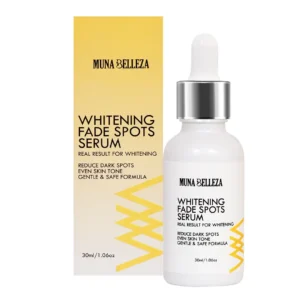
Dark Spot Correcting Serum
Original price was: 132.00.101.00Current price is: 101.00. Add to cartA lightweight dark spot correcting serum powered by Niacinamide and Alpha Arbutin. It visibly fades the look of dark spots, sun spots, and post-acne marks while evening out skin tone, gentle enough for daily use, morning and night.
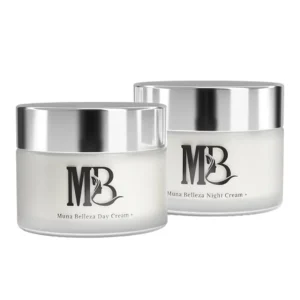
Day and Night Cream Set
Original price was: 199.00.153.00Current price is: 153.00. Add to cartA complete brightening routine in two jars: a day cream that visibly evens skin tone and plumps with niacinamide and shea butter, and a night cream with arbutin, vitamin C and hyaluronic acid that works on the look of pigmentation and fine lines while you sleep. For men and women, all skin types.
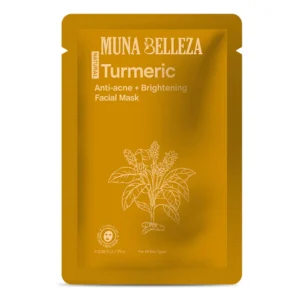
Turmeric Face Mask Sheet
Original price was: 25.00.19.00Current price is: 19.00. Add to cartA turmeric face mask for breakout-prone skin and the marks breakouts leave behind. Curcumin-rich turmeric meets honey, niacinamide, alpha-arbutin and tranexamic acid in a soft natural-fibre sheet — 15 minutes to calmer-looking, visibly brighter skin. 25ml, all skin types.
What Is Alpha Arbutin?
Alpha arbutin is a brightening ingredient derived from the bearberry plant, though the version in modern skincare is made in the lab for purity and stability. Chemically, it's a gentler, more stable cousin of hydroquinone — the old-school brightener dermatologists have used for decades. The clever part is how it's built: alpha arbutin carries a brightening core wrapped in a sugar molecule, and your skin releases that core slowly, a little at a time. That slow release is the whole reason it works without the irritation stronger brighteners are famous for.
You'll see two forms on labels: alpha arbutin and beta arbutin. Alpha is the one worth looking for — it's more stable and more effective on skin, which is why serious brightening serums are built around it.
How Does Alpha Arbutin Fade Dark Spots?
To understand alpha arbutin, it helps to know where dark spots come from. Deep in your skin sits an enzyme called tyrosinase — think of it as the switch that starts pigment production. Whenever skin is triggered by sun, a healing breakout or hormones, tyrosinase fires up and makes extra melanin, which settles as a dark spot.
Alpha arbutin works by gently turning that switch down. It slows tyrosinase, so skin makes less excess pigment in the first place. Existing spots then fade naturally as your skin renews itself, while fewer new ones form. It's a patient, upstream approach rather than a harsh bleaching one — which is exactly why the results look even and natural rather than patchy.
The Real Benefits of an Alpha Arbutin Serum
Alpha arbutin has earned its place for a handful of genuine reasons, not marketing hype.
It fades dark spots and evens tone gently
Its main job, and the one it does well: softening the look of sun spots, post-acne marks and general unevenness over time. Because it works upstream on pigment production, the fading looks gradual and uniform rather than blotchy.
It's kind to sensitive skin
This is what sets alpha arbutin apart. Many brighteners force results by irritating the skin, which backfires — especially on deeper skin tones, where irritation can trigger the very pigment you're trying to fade. Alpha arbutin's slow-release design makes it one of the gentlest effective brighteners available, suitable for most skin types including sensitive.
It layers easily with other ingredients
Alpha arbutin is a team player. It sits comfortably alongside niacinamide, hyaluronic acid and vitamin C, which is why you'll often find it paired with them rather than used alone — the combination brightens from more than one angle at once.
Alpha Arbutin vs Hydroquinone: Which Is Better?
This is the comparison most people are really asking about, so here's the honest version.
Hydroquinone is powerful and works fast, but it comes with baggage: it can irritate, it isn't meant for long-term continuous use, and in many countries it's restricted to prescription strength for good reason. It's a short-course treatment, not a daily-forever ingredient.
Alpha arbutin trades a little speed for a lot of peace of mind. It's slower, yes — but it's gentle enough for daily long-term use, it doesn't carry the same restrictions, and for everyday dark spots that's usually the better trade. For most people looking to fade pigmentation at home, alpha arbutin is the sensible first choice; hydroquinone is a decision to make with a dermatologist, not off a shelf.
How to Use an Alpha Arbutin Serum
Getting results is less about the bottle and more about the habit.
Morning — after cleansing, press a few drops into clean skin, let it absorb, follow with moisturiser, and finish with broad-spectrum sunscreen. This last step isn't optional: sunlight is the biggest cause of the pigment you're trying to fade, so skipping SPF cancels out the serum's work.
Evening — cleanse, apply again, and let it work overnight while skin is in repair mode.
Consistency is the whole game. Alpha arbutin fades pigment gradually, so most people see tone looking more even somewhere in the four-to-twelve-week window with daily use and daily sunscreen. It's gentle enough to use twice a day, every day — but if your skin is new to actives, start once daily and build up.
Which Muna Belleza Products Contain Alpha Arbutin?
We build alpha arbutin into the formulas where brightening matters most, always paired with supporting ingredients rather than used alone.
Dark Spot Correcting Serum — for spots, marks and uneven tone. This is our alpha arbutin serum: arbutin works alongside niacinamide, with hyaluronic acid and panthenol keeping skin calm and hydrated. If pigmentation is your main concern, this is the bottle to start with.
Day and Night Cream Set — for around-the-clock brightening. Arbutin and vitamin C take the night shift while niacinamide brightens by day — the same brightening goal, in a cream you'll reach for if you prefer moisture and actives in one step.
Turmeric Face Mask — the weekly boost. Alpha arbutin joins niacinamide and tranexamic acid in a 15-minute sheet mask, a good companion to a daily serum when post-breakout marks are your pattern.
FAQ
What are the benefits of an alpha arbutin serum?
An alpha arbutin serum gently fades the look of dark spots, sun spots and post-acne marks while evening out overall skin tone. Its biggest advantage is how it does this — slowly and without the irritation that harsher brighteners cause — which makes it suitable for daily long-term use and for sensitive skin.
Is alpha arbutin safe for daily use?
Yes. Unlike stronger brighteners meant only for short courses, alpha arbutin is gentle enough to use morning and night, every day. If your skin is new to active ingredients, start once a day and build up, and always patch test a new product first.
Can I use alpha arbutin with niacinamide or vitamin C?
Yes — alpha arbutin layers beautifully with both. It's often paired with niacinamide and vitamin C precisely because they brighten through different pathways, so together they cover more ground than any one alone. Our own serum pairs arbutin with niacinamide for exactly this reason.
How long does alpha arbutin take to work?
Expect gradual, not instant. Most people notice tone looking more even between four and twelve weeks of consistent daily use, with daily sunscreen making a real difference to the speed. Recent, lighter spots fade first; older, deeper pigment takes longer.
Is alpha arbutin better than hydroquinone?
For everyday at-home use, usually yes — alpha arbutin is far gentler, has no continuous-use restrictions, and gives even, natural-looking results. Hydroquinone is stronger and faster but harsher and meant for short, dermatologist-guided courses. Different tools for different situations.
Does alpha arbutin make skin sensitive to the sun?
No, it doesn't increase sun sensitivity the way some actives do. But daily sunscreen is still essential while using it — not for safety, but because sun exposure is the main driver of the dark spots you're working to fade, and unprotected skin undoes the progress.