Aloe vera is probably the most familiar plant in UAE skincare: a pot on the balcony, a tube in the fridge after a beach day, a sheet mask on a Friday night. But which aloe vera uses for face really help, and which are just habit? The honest answer is that aloe is excellent at a few things, calming, cooling and light hydration, and not much use for others, like fading scars or changing your skin colour.
This guide covers what the evidence supports, how to use aloe safely on your face, and when something stronger makes more sense. For an easy start, our hydrating face mask with aloe vera gives your skin a soothing, cooling dose of moisture in 15 to 20 minutes.
What’s inside aloe vera gel
The clear gel inside an aloe leaf is about 99% water. The rest is a mix of polysaccharides (sugars that hold water on the skin), small amounts of vitamins, amino acids, enzymes and plant compounds that calm inflammation. Just under the leaf skin is a separate yellow sap called aloe latex, which contains aloin. Aloin can irritate the skin, so good skincare products use purified, decolourised gel.
Benefits of aloe vera on face: what the evidence says
- Soothing and cooling: the best-supported use. Reviews of clinical studies suggest aloe gel helps mild burns and sunburn heal and feel better.
- Light hydration: the polysaccharides act as a humectant, drawing water to the surface. That’s why aloe vera moisturizer benefits are felt most on oily and combination skin that dislikes heavy creams.
- Calming redness: aloe can take the heat out of skin that’s irritated by sun, shaving, waxing or air-conditioning.
- Gentle support for acne care: a small trial found that aloe gel used alongside a tretinoin cream reduced acne more than tretinoin alone, and was better tolerated. Aloe isn’t an acne treatment by itself, but it can make strong treatments easier to live with.
7 practical aloe vera uses for face
- After-sun soother: apply a cool layer of plain gel after a day at the beach or the desert. Store it in the fridge for extra comfort. Don’t use it on blistered skin; see a doctor for that.
- Light daily moisturiser: on oily skin in summer, a thin layer of aloe gel can be enough on its own. Dry skin needs a cream on top.
- Calming mask: leave a thick layer of gel or an aloe sheet mask on for 15–20 minutes, then pat in what’s left.
- Aloe vera and honey face mask: mix one tablespoon of aloe gel with one teaspoon of raw honey, apply for 10–15 minutes and rinse. Both are humectants, and honey adds a gentle soothing effect. Skip it if you’re allergic to bee products.
- Aloe vera ice cubes for face: freeze plain gel in an ice tray. Wrap a cube in a thin cloth and glide it over puffy or hot skin for a minute or two. Never hold ice directly on one spot.
- After shaving or threading: a thin layer helps calm redness and razor burn.
- Under make-up: a very thin layer can act as a light hydrating base. Let it dry for a minute first, or it can pill.
What about an aloe vera face wash? Its benefits are mostly comfort: aloe makes a cleanser feel less stripping, but it’s rinsed off within a minute, so don’t expect treatment results.
Acne, scars and dark spots: realistic expectations
- Is aloe vera good for acne scars? It can soothe red, healing marks, but it won’t fill in raised or pitted scars. Our guide to acne marks vs acne scars explains what does help.
- Is aloe vera good for melasma? Aloe contains aloesin, which has some brightening activity in the lab, but there’s little evidence that plain gel fades melasma. Daily sunscreen and proven ingredients matter more; read our melasma guide.
- Can aloe whiten skin? No. It can make skin look fresher and calmer, but it doesn’t change your natural skin colour. For dark spots, ingredients such as niacinamide, vitamin C and alpha arbutin have far better evidence.
Fresh plant or shop-bought gel?
Fresh from the plant: cut a mature leaf, stand it upright for 10–15 minutes so the yellow latex drains, rinse, then scoop out only the clear gel. Use it within a few days and keep it in the fridge, since fresh gel has no preservative.
Shop-bought gel: look for aloe (Aloe barbadensis leaf juice or gel) as the first ingredient, no added alcohol and little or no fragrance. Bright green colour usually means added dye, not more aloe.
“Aloe vera oil”: aloe gel doesn’t mix with oil, so these products are usually aloe extract in a carrier oil such as sunflower or coconut. The benefits come mostly from the oil, which may clog pores on oily skin.
Side effects and who should be careful
Aloe vera side effects on skin are uncommon but real. Some people get redness, itching or a rash, especially from home-made gel with latex left in. People allergic to plants in the lily family, such as garlic, onion or tulips, are more likely to react. If you’re using aloe for a skin allergy, test it first: apply a little behind your ear or on your jaw for 24–48 hours. Stop if it stings or itches, and see a doctor for any rash that spreads or doesn’t settle.
Common questions
Can we apply aloe vera on face daily?
Yes, most people can use pure, well-tolerated aloe gel every day, morning or night. If your skin feels tight afterwards, add a moisturiser on top.
Can I leave aloe vera on my face overnight?
Plain gel is usually fine overnight. A thin layer is enough; a thick one can feel sticky and transfer to your pillow.
Is aloe vera good for oily skin?
Yes. It’s light, water-based and non-greasy, which makes it one of the friendliest hydrators for oily skin. Our oily skin guide covers the rest of the routine.
Does aloe vera help with acne?
It can calm inflamed spots and make treatments gentler, but you’ll still need an active such as salicylic acid or a retinoid to clear acne.
Want aloe’s calming hydration without the mess? Our aloe vera mask is made in Korea, with free delivery to every emirate and cash on delivery available.
Learn more about our face masks.
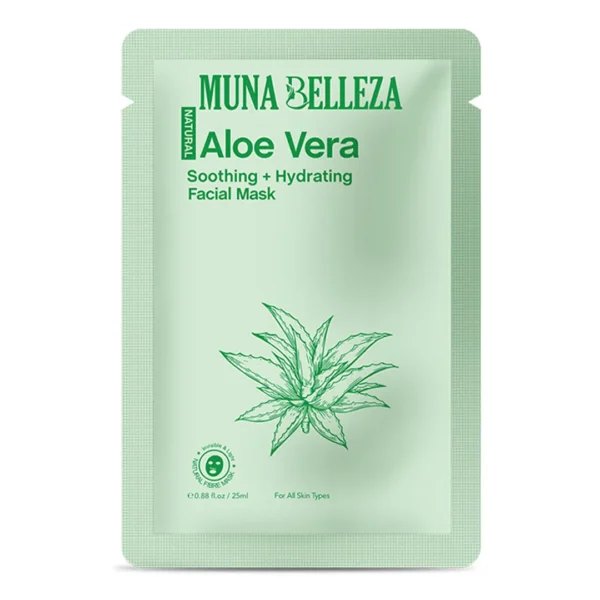 Aloe vera face mask
 Vitamin C serum
 Collagen face mask