Blackheads on the nose, a shiny T-zone by lunchtime, small bumps that keep coming back in the same places: if that sounds like your skin, someone has probably told you to try salicylic acid. You will find it in cleansers, toners, serums, creams and masks in every UAE pharmacy, usually with big promises on the label. So which of those promises hold up, and how do you use it without drying your face out? It comes down to the strength, the type of product and how often you use it. This guide covers all three, the real salicylic acid benefits for skin, and honest answers on mixing it with niacinamide, vitamin C, retinol and benzoyl peroxide.
What is salicylic acid?
Salicylic acid is a beta hydroxy acid, usually shortened to BHA. Is salicylic acid a BHA? Yes, and in skincare it is almost the only one, so when a label says “BHA” it nearly always means this ingredient.
What sets it apart from other exfoliating acids is that it dissolves in oil. Pores are lined with sebum, the skin’s own oil, and water-based acids struggle to get through it. BHA moves through that oil and works inside the pore, exactly where blackheads and whiteheads begin.
It is also a close chemical relative of aspirin. Both belong to the salicylate family, which explains two things: it calms redness as well as exfoliating, and people who are allergic to aspirin should not use it.
Is there natural salicylic acid?
The name comes from the willow tree (Salix), and willow bark and wintergreen were its first sources. Today the BHA in skincare is made in a lab, so every batch has the same purity and strength. Willow bark extract, which you may see on “natural” labels, mainly contains salicin, a milder relative. It is not the same as a measured percentage of BHA.
Why pH matters
It works best in a mildly acidic formula, roughly pH 3 to 4, where more of it stays in its active form. You cannot check this at home, but it is one reason two products both labelled 2% can feel and perform quite differently.
What salicylic acid does for skin
Here is what the research and dermatology guidance support:
- Loosens blackheads and whiteheads – it softens the plug of oil and dead cells sitting in the pore, so it can clear out.
- Stops new clogs forming – with regular use, the pore lining keeps shedding normally instead of sticking together.
- Calms angry spots – its mild anti-inflammatory effect takes some of the redness out of small pimples.
- Less shine, neater-looking pores – clear pores look smaller. No ingredient can shrink them for good, but clean ones are far less visible.
- Smoother texture – it softens rough patches and tiny bumps, on the face and also on arms or the back.
As for ageing: smoother, clearer skin looks fresher, but BHA is not a wrinkle treatment. For lines, retinoids and daily sunscreen have far stronger evidence.
If you would rather use it as a focused weekly treatment than a daily product, our blackhead mask pairs BHA (the pouch is labelled 2%) with glycolic acid, hyaluronic acid and soothing allantoin. You leave it on for 15 minutes once or twice a week, then rinse.
Salicylic acid for acne and pimples
Is salicylic acid good for acne? For the most common kind, yes. Almost every pimple starts as a pore blocked by oil and dead cells, called a comedone. BHA is strongest at exactly this stage, so it suits blackheads, whiteheads and small skin-coloured bumps best.
Once a pimple is red and swollen, it helps only a little by calming the redness and keeping the pore open, but it does not kill acne bacteria. Deep, painful lumps under the skin (nodules and cysts) need a dermatologist, because only prescription treatment reaches them. Our guide to acne types and treatment explains which kind you have.
Give it time. Most people notice fewer clogged pores after 4 to 6 weeks of steady use, and the full effect takes 2 to 3 months.
Does salicylic acid help acne scars?
Not the pitted kind. No cream or serum fills a dent in the skin. Regular exfoliation can help flat brown marks left by old pimples fade a little faster, and much stronger salicylic peels (20 to 30%) are used in clinics for some shallow scars, but only by a professional. Read acne marks vs acne scars to tell which one you are dealing with.
Strengths: 0.5%, 2% and higher
The number on the label tells you what a product is for:
- 0.5% to 2% – everyday skincare strength. This is the range allowed in over-the-counter acne products in the US, and 2% is the usual maximum for the face.
- Salicylic acid 2% solution – a leave-on liquid or serum at the top of that range. Effective, but start every other night.
- 3% to 10% – mostly scalp, dandruff and body products, or pharmacy medicines. Not for daily use on the face.
- 17% to 40% – corn plasters and wart treatments. These remove thick skin and should never go near your face.
- 20% to 30% peels – done in a clinic, with controlled timing.
Cleanser, serum, cream or mask?
The type of product matters as much as the percentage, because it decides how long the acid stays on your skin.
- Cleanser – about a minute of contact, so it is the gentlest start. Salicylic acid face wash benefits are real but modest; it suits beginners and sensitive skin.
- Toner, serum or solution – leave-on, so the strongest effect. Best for stubborn blackheads.
- Cream or moisturiser – usually a lower strength, handy if you want one step instead of two.
- Mask – a concentrated session once or twice a week, then rinsed off.
- Spot gel – dabbed on single pimples only.
So what is the best salicylic acid serum or cream? Look for 0.5 to 2%, hydrating ingredients such as glycerin or hyaluronic acid alongside it, and no fragrance if your skin reacts easily. Then pick the strength you can use regularly without flaking.
How to use salicylic acid
Step by step:
- Patch test – try it on a small area along your jaw for two or three evenings.
- Cleanse and dry well – acids sting more on damp skin.
- Apply a thin layer where you get congested: nose, forehead, chin. Keep it away from your eyes, lips and the corners of your nose.
- Moisturise once it has absorbed.
- Sunscreen the next morning – SPF 30 or higher. Freshly exfoliated skin burns more easily, and UAE sun is strong all year.
How many times should you use salicylic acid?
A cleanser can be used daily if your skin stays comfortable. With a leave-on serum or toner, start with two or three evenings a week and build up only if there is no dryness. Masks are a once- or twice-a-week step. Evening use is simplest, because your skin then rests overnight away from the sun.
Does salicylic acid cause purging?
It can. Because it speeds up shedding inside the pore, clogs that were already forming come to the surface sooner, so you may see small spots in your usual problem areas for the first few weeks. A purge should settle within about 4 to 6 weeks. Spots in new places, burning, or a rash are not purging: that is irritation, and the product is not right for you.
Does BHA dry your skin?
It can, especially when you spend most of the day in air-conditioning. Tightness and flaking around the nose are the first signs. Use it less often and add a moisturiser with glycerin or hyaluronic acid rather than stopping completely.
What to mix with it, and what to space out
- Niacinamide – can you use salicylic acid and niacinamide together? Yes. The old worry about the two cancelling out has not held up with modern formulas. Apply BHA first, or keep niacinamide for the morning. Our niacinamide serum is one easy option.
- Vitamin C – can you mix BHA and vitamin C? Yes, at different times: vitamin C in the morning, BHA in the evening. Both are acidic, and layering them adds irritation without extra benefit. More in our guide what is a vitamin C serum.
- Retinol – using retinol and BHA together can be too much, since both speed up skin renewal. Alternate nights, or use a BHA cleanser with retinol afterwards.
- Benzoyl peroxide – can I use it with benzoyl peroxide? Yes, it is a common acne pairing, but it dries skin quickly. Use one in the morning and one at night. Benzoyl peroxide also bleaches towels and pillowcases.
- Glycolic or lactic acid – many products combine AHA and BHA at balanced strengths, which is fine. Layering separate acid products on the same night is where trouble starts.
- Hyaluronic acid, ceramides, glycerin – yes. They replace the moisture that exfoliation takes away.
Salicylic acid vs benzoyl peroxide and AHAs
Benzoyl peroxide vs salicylic acid
The difference is the job each one does. Benzoyl peroxide kills acne bacteria, so it is better for red, inflamed pimples. BHA unclogs pores, so it is better for blackheads, whiteheads and oiliness. Benzoyl peroxide is usually more irritating. Mixed acne often does well with both, used at different times of day.
AHA vs salicylic acid
AHAs such as glycolic and lactic acid dissolve in water, so they work on the surface: dullness, rough texture, uneven tone. Glycolic is the smallest and strongest AHA; lactic is gentler and slightly hydrating. Lactic acid or salicylic acid? Dry, dull skin usually prefers lactic acid. Oily, clogged skin does better with BHA.
Can glycolic acid lighten skin?
It brightens a dull complexion and helps flat dark marks fade by removing surface cells. It does not change your natural skin colour, and no acid is a “whitening” product. For dark spots, look at niacinamide, arbutin and vitamin C, always with daily sunscreen.
Is it right for your skin?
- Oily skin – the best match. Most people can work up to regular use.
- Combination skin – yes; apply it only to the T-zone and leave dry cheeks alone.
- Teenage skin – a good first active for teenage blackheads. Start with a cleanser rather than a strong serum.
- Dry or sensitive skin – use a low-strength, wash-off product two or three times a week, and skip it during eczema or rosacea flare-ups.
- Pregnancy – low-strength wash-off products are generally considered low risk, but avoid peels and high strengths, and check with your doctor first.
- Aspirin allergy – avoid it.
- Men – works well on oily T-zones; leave a few hours after shaving before applying it.
Common questions
Does salicylic acid work? What results can I expect?
Yes, for clogged pores. A realistic before and after looks like this: less shine and smoother skin within the first two weeks, fewer blackheads by weeks 4 to 6, and a clearly calmer pattern of breakouts by month three. Stop using it and pores gradually clog again, so treat it as part of your routine rather than a one-off fix.
Is BHA an exfoliant?
Yes. It is a chemical exfoliant, so there is no need to scrub. Using it alongside a grainy scrub is one of the quickest ways to irritate your skin.
Do acid products expire?
Yes, salicylic and glycolic acid products both have a shelf life. Look for the open-jar symbol on the pack (6M or 12M means months after opening), keep them away from heat and never leave them in a hot car. If the smell, colour or texture changes, replace the product.
What products have salicylic acid?
Face washes, toners, serums, spot gels, moisturisers, sheet masks, dandruff shampoos, body washes and corn plasters. Check the ingredient list for “salicylic acid”; willow bark extract alone is not the same thing.
Where can I buy salicylic acid products in the UAE?
Pharmacies across the Emirates stock them, and you can order ours online. The salicylic acid mask ships free to every emirate, with cash on delivery available.
Learn more about skin care products for oily skin.
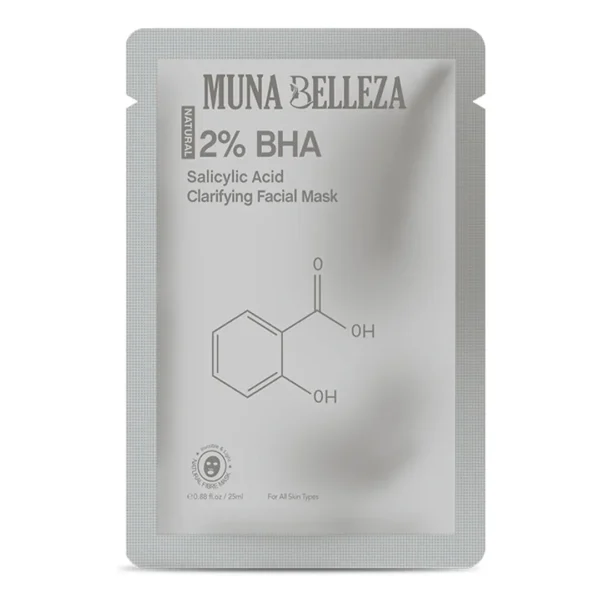 Salicylic acid mask
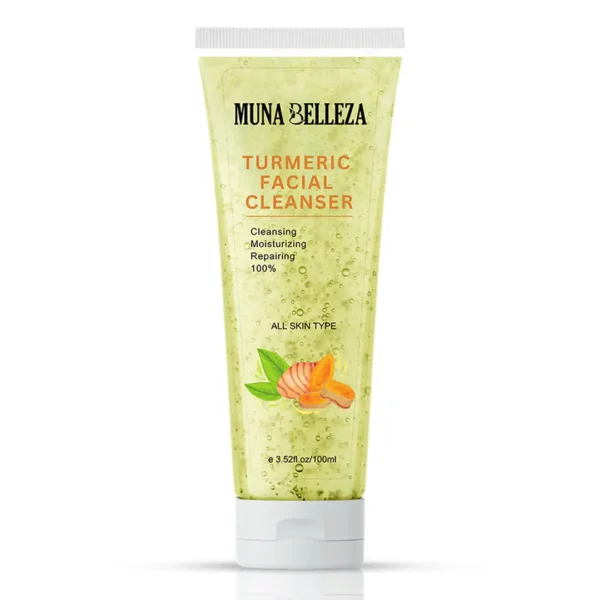 Turmeric face wash
 Aloe vera mask