Lean close to the mirror and you may see a field of tiny grey dots across your nose, all roughly the same size. Most people call them blackheads and start squeezing. In many cases they are actually sebaceous filaments, a normal part of how every pore works, and treating them like blackheads usually leaves skin red and the dots back within a week.
Below, you will learn to spot the difference, why filaments look darker and larger in Gulf heat, and what actually makes them less noticeable. A quick spoiler: they are permanent residents, and you would not want them gone.
What sebaceous filaments are
Each pore on your face holds a tiny oil gland. Sebaceous filaments are thin, thread-like linings that guide that oil, called sebum, from the gland up to the surface, where it keeps skin soft and protected. Everyone has them. They are made of oil and skin cells, they are not acne, and they are not a sign of poor hygiene.
You only notice them when the pore is a little wider than usual or the oil inside has built up, so the top of the filament shows as a small grey, beige or yellowish dot.
Sebaceous filaments vs blackheads: how to tell
| Sebaceous filament | Blackhead | |
|---|---|---|
| Colour | Light grey, tan or yellowish | Dark brown to black |
| Pattern | Small, even dots spread evenly over an area | Scattered, uneven sizes |
| Feel | Flat, you cannot feel them | Sometimes slightly raised |
| When pressed | A thin, pale, waxy thread, or nothing | A firm, dark plug |
| After removal | Refills in a few days to a month | Can stay away with a good routine |
A blackhead is a pore that has become blocked: dead cells and oil form a plug, and its top darkens when it meets air. A filament is the pore doing its normal job. If your dots are uneven, dark and only in a few places, read our blackhead removal guide instead.
Sebaceous filaments on the nose, chin and cheeks
They are most visible where oil glands are biggest and busiest. The nose comes first, then the chin, the forehead and the inner cheeks beside the nose. Sebaceous filaments on the cheeks often look like a fine sprinkle of dots that becomes more obvious by late afternoon, when oil has built up.
For nose-specific care, our guide on clearing the nose area covers cleansing and gentle extraction in detail.
Why yours look bigger or darker
- Oily skin and heat. More oil fills the pore and stretches the opening. Humid summer days in the UAE make this worse.
- Genetics. Some people simply have larger oil glands and wider pores.
- Hormones. Glands grow busier from puberty on, and output shifts across the monthly cycle.
- Ageing and sun damage. As skin loses firmness, the walls around each pore relax and the opening looks larger.
- Over-cleansing. Stripping skin with harsh washes can leave it irritated and shiny, not less oily.
Should you squeeze them or use pore strips?
Please don’t squeeze. Pressing hard with fingers or nails can bruise skin, break small blood vessels, push oil deeper and leave marks, and the filament grows back anyway, often within days. Skin gritting, oil-pulling tricks and suction devices carry the same risks.
Strips pull away the tips of a few filaments, so your nose looks cleaner for a short time, but they can irritate the skin and the dots return quickly. If you use them, keep it occasional and never on sore or sunburnt skin.
Sebaceous filaments treatment: how to make them less visible
The aim is not removal but a smaller, cleaner-looking pore. These steps have the best support:
- Cleanse gently, twice a day. A mild cleanser with lukewarm water removes surface oil without irritation.
- Use salicylic acid. This oil-soluble acid (BHA) gets inside the pore and loosens the oil and cells that build up there. Strengths and a gentle starting plan are in our salicylic acid guide.
- Add a retinoid at night. Retinol, or adapalene from a pharmacy, helps keep pore linings from clogging and can make pores look smaller over a few months.
- Try niacinamide. It may help balance oil and is easy to combine with other steps.
- Still moisturise. A light, oil-free moisturiser keeps the skin barrier calm, so skin is less likely to overproduce oil.
- Wear sunscreen daily. UV slowly breaks down the collagen that holds each pore tight, so openings stretch.
Expect the dots to fade, not vanish. Results build over four to eight weeks and fade again if you stop.
Where our Salicylic Acid Face Mask fits
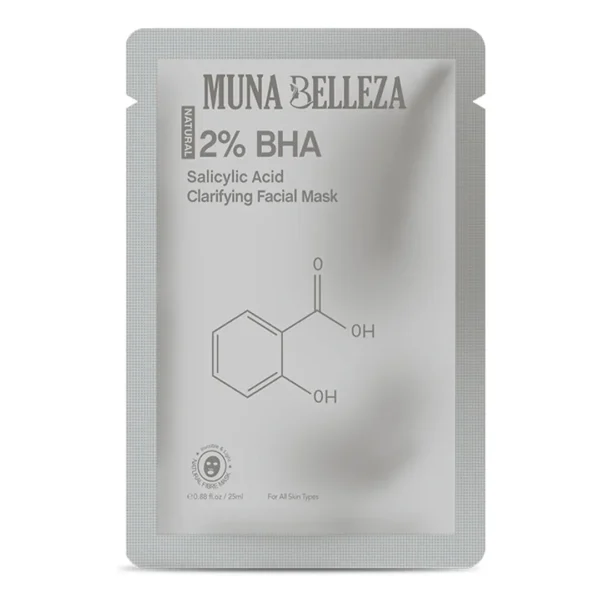
Muna Belleza’s Salicylic Acid Face Mask comes as one sheet per pack, soaked with 2% salicylic acid and a little glycolic acid, plus witch hazel water, glycerin, betaine, beta-glucan and hyaluronic acid to balance the acids. It is designed as a weekly 15-minute treatment for oily, congested areas like the nose and chin.
Start once a week and go up to twice a week if your skin stays comfortable. Apply it in the evening, then be strict with SPF the following morning, because acids raise sun sensitivity. Fragrance is part of the formula; test a small area first on reactive skin. It will make filaments look smaller and cleaner for a while; like every option, it will not remove them for good.
To browse everything we have for oily, congested skin, visit our blackheads and pores collection.
Questions
Sebaceous filaments: how to get rid of them for good?
You can’t, because every pore needs them to carry oil. You can only keep them less visible with regular care.
Is sebaceous filaments removal at a clinic worth it?
A facial or extraction makes them look clearer for a short time, but they refill. Prescription retinoids from a dermatologist give longer-lasting improvement.
Do sebaceous filaments turn into blackheads?
They can if the pore gets blocked and the oil plug thickens. Regular gentle exfoliation helps prevent that. See why pores clog at all in our clogged pores guide.
Can sebaceous filaments appear on the chin and forehead too?
Yes. Anywhere with many oil glands can show them, and the chin often has more during hormonal changes.
Treat those little dots as a sign that your skin is working. Gentle, steady care will keep them quiet without hurting your face. Delivery is free in all seven emirates, with card, Apple Pay or cash on delivery.
 Weekly BHA sheet mask