You notice it in the car mirror, or in a photo taken in bright light: a brown mark on your cheek, a cluster of small black spots near your eyes, a shadow where a pimple used to be. Dark spots on face are one of the most searched skin worries in the UAE, and the advice online ranges from sensible to strange: toothpaste, lemon, creams that promise clear skin in three days. Before you buy anything, it helps to ask a simpler question: what kind of spot is this, and why is it there?
Most black spots on face and brown marks are harmless and respond well to the right routine, but a few are not pigment problems at all, and no cream will change them. This guide helps you read your spots, then gives you a realistic week-by-week plan to fade the ones that can be faded. If you already know your spots are marks from sun or breakouts, our dark spot remover for face range is a good place to start.
What your dark spots are telling you
Colour, texture and position give you strong clues. Look in daylight, not under bathroom lights.
Flat and brown
This is the most common kind, and where it sits on the face usually points to the cause:
- Cheekbones, nose and forehead: the high points of the face catch the most sun, so spots here are often sun-related. They tend to darken after summer.
- Jawline, chin and cheeks: spots in the same places you get pimples are usually marks left by old breakouts.
- Upper lip, forehead and both cheeks in a matching pattern: wide, blurry patches rather than dots suggest melasma, which behaves differently. Our guide to hyperpigmentation explains it in detail.
- Beard area in men: small brown dots often follow shaving cuts and ingrown hairs.
Red, pink or purple
A mark that looks red rather than brown after a pimple is usually not pigment. It comes from small blood vessels that widened during the inflammation. Press a clear glass gently on it: if the colour fades under pressure, it is redness. These marks fade on their own over a few months, and brightening ingredients do less for them than for brown spots.
Small, raised and black
Tiny dark bumps on the cheeks and around the eyes, often in several family members, are frequently dermatosis papulosa nigra. They are harmless, often run in families and are most common in darker skin tones. Because they are raised growths, creams don’t fade them; a dermatologist can remove them if they bother you. On the nose, what looks like black spots is often blackheads, which need unclogging, not brightening.
Rough, waxy or “stuck on”
A brown, slightly raised patch that feels rough and looks like it could be scratched off is often a seborrheic keratosis. These are harmless and become more common after 40, but they are skin growths, so again a doctor, not a serum, is the answer.
Why a dark spot can appear suddenly
A new spot that seems to arrive overnight usually has a trigger from the past few weeks. Common ones in the Gulf:
- A pimple you barely noticed, an insect bite or a scratch. Medium and darker skin can leave a mark after even mild inflammation.
- Threading, waxing or hair removal creams on the upper lip and eyebrows, especially if the skin was red or sore afterwards.
- Perfume sprayed on the neck and then worn in the sun. Some fragrance oils, bergamot in particular, react with sunlight and leave brown streaks or drip-shaped marks.
- Lime or lemon juice on the skin outdoors, from cooking, drinks or a home remedy. The juice plus sun can cause a burn that heals as a dark patch days later.
- A new product that stung or peeled, such as a strong acid or a cream bought from an unknown seller.
- Pregnancy or starting the contraceptive pill, which can bring out patches on both cheeks.
If none of these fit, and the spot is new, growing or different from your other spots, have it checked (see the doctor section below).
How to get rid of dark spots on face: a 12-week plan
Flat brown spots from sun or breakouts fade with steady, gentle care. The plan below keeps things simple so your skin doesn’t get irritated, because irritation is exactly what creates new marks.
Weeks 1–2: build the base
Use a mild cleanser, a moisturiser and sunscreen every morning. Stop anything that burns, scrubs with grains or has caused redness. If you have active breakouts, start treating them now. This sounds slow, but a calm skin barrier is what lets the next step work.
Weeks 3–6: add one brightening step
Add a serum with a proven pigment ingredient, such as niacinamide, arbutin, vitamin C or tranexamic acid, once a day. Apply it to the whole face rather than dabbing it only on the spots: new spots start forming before you can see them, and dabbing can leave a lighter ring around a darker centre. Our dark spot correcting serum pairs niacinamide with arbutin; it has a light fragrance, so try it on a small area of your jaw for a few days first. You can read more about how niacinamide works on uneven tone.
Weeks 7–12: look, then adjust
Take a photo in the same window light as on day one. Most people see the first softening of the edges here, not complete fading. If your skin is comfortable, you can add a night cream with brightening ingredients or a weekly sheet mask. If nothing has changed at all, check the basics: are you using enough sunscreen, every day, and are new pimples still leaving fresh marks?
After 12 weeks: keep going
Older and darker spots often need four to six months. Keep the routine that works, and expect sun spots to return if sun protection slips. Results that last come from protection, not from switching to a stronger product every month.
Dark spots after pimples
The pimple dark spot is the mark most people in their teens, twenties and thirties are fighting, and the trick is to stop the cycle. Every new breakout can leave a new mark, so treating acne is treating dark spots.
- Don’t squeeze or pick. Pressure pushes the inflammation deeper, which leaves a darker, longer-lasting mark.
- Use salicylic acid on oily, breakout-prone areas. It clears inside the pore, which means fewer breakouts and fewer new marks. Our salicylic acid guide explains how to use it without drying your skin.
- Cover healing spots. A hydrocolloid pimple patch stops you touching the spot and protects it from sun while it heals.
- Check the texture. A flat mark will fade with time and care; a dent or raised scar won’t. Our article on acne marks vs acne scars shows how to tell them apart.
Can you remove dark spots fast or overnight?
Searches for “how to remove dark spots on face overnight” and “in 3 days” are some of the most common in the UAE, so here is the honest answer: no product removes pigment that quickly. The melanin sits in skin cells that take weeks to move up and shed. A cream that seems to work in a few days is usually doing one of three things: covering the spot with a whitening tint, peeling the top layer so skin looks pink and fresh for a while, or containing ingredients that are not allowed in cosmetics.
What you can do quickly is cover them well while your routine works:
- Neutralise first. On medium and darker skin, a peach or orange colour corrector cancels the grey-brown of a spot. On fair skin, a light peach shade works better.
- Then conceal. Tap a concealer that matches your skin (not lighter) over the corrector with a finger, and set it with a little powder.
- Keep it thin. Two light layers hide more and last longer in the heat than one thick one.
Sunscreen mistakes that keep spots dark
Most people who say “nothing works on my spots” are using sunscreen, just not in a way that protects the spots. The common gaps:
- Too little. The SPF on the bottle is tested with a thick layer. For the face and neck, that is about two finger-lengths of product. A thin smear gives a fraction of the protection.
- Relying on SPF in makeup or moisturiser. Nobody applies enough foundation to reach the number on the label. Use it as an extra, not the only layer.
- Missing the spot zones. Cheekbones, the bridge of the nose, temples and the hairline are where sun spots gather and where sunscreen is often rubbed off first.
- Stopping in the cooler months. The UAE winter sun is still strong enough to darken pigment that you spent all summer fading.
Popular fixes that don’t work
- Toothpaste. It contains detergents, flavour oils and sometimes fluoride, all made for teeth. On the face it often irritates, and irritation darkens spots.
- Vitamin E oil from a capsule. There is no good evidence it fades pigment, and it is a known cause of allergic rashes on the face.
- Tea tree and other essential oils dabbed neat. Undiluted oils can burn the skin. Diluted in a finished product they can help some breakouts, but they are not a dark spot treatment.
- Hyaluronic acid “for dark spots”. It is a great hydrator, and hydrated skin looks brighter, but it doesn’t reduce melanin.
- Scrubbing harder. Gentle exfoliation helps surface spots shed. Rough scrubs and daily peeling do the opposite and leave new marks, especially on darker skin.
- Before-and-after photos on social media. Lighting, filters and makeup can change a spot more than any cream. Judge a product by its ingredients and your own photos over weeks.
When a dark spot needs a doctor
Most facial dark spots are harmless, but skin cancer can look like a brown or black spot too. Dermatologists use the ABCDE checklist. See a doctor if a spot is:
- Asymmetrical: the two halves don’t match.
- Border: ragged, notched or blurred edges.
- Colour: several shades in one spot, such as brown, black, red or blue.
- Diameter: larger than about 6 mm, the size of a pencil eraser.
- Evolving: changing in size, shape or colour, or starting to itch, bleed or crust.
Also get checked if one spot looks different from all your others (doctors call this the “ugly duckling” sign), or if a sore or spot doesn’t heal within a few weeks. Raised spots you would simply like removed are also a job for a dermatologist rather than a cream.
Common questions
How do I get rid of dark spots on my nose?
First check whether they are blackheads: if you can see tiny dots in the pores, they need salicylic acid or a weekly clay or BHA mask, not a brightening cream. True brown spots on the nose are usually from sun, so sunscreen on the bridge of the nose matters as much as any serum.
Why do men get dark spots on the face?
The same reasons as everyone, plus shaving. Razor bumps and ingrown hairs inflame the beard area and leave marks. Shave with the direction of hair growth using a sharp blade, and men who spend long hours outdoors or driving should treat sunscreen as part of the routine too.
Can a face wash remove dark spots?
Not really. A cleanser stays on the skin for less than a minute, so its brightening ingredients have little time to work. Choose a face wash that suits your skin type and doesn’t irritate, and let a serum or cream do the brightening.
What should I eat to reduce dark spots on my face?
No food fades spots. A diet rich in fruit and vegetables supports healthy skin in general, but it won’t replace sunscreen or a topical treatment, and supplements that promise skin whitening should be avoided.
Do dark spots come back after they fade?
Sun spots and melasma can return with sun exposure, which is why protection continues after the spots are gone. Marks from old pimples don’t come back by themselves, but new breakouts can leave new ones.
What is the best treatment for dark spots on the face?
For flat brown spots, the best treatment is a daily routine you can keep up: one proven brightening ingredient, a moisturiser and generous sunscreen. Our day and night cream set adds niacinamide and licorice in the morning and arbutin with vitamin C at night (the day cream has no SPF, so sunscreen still goes on top). For deep or stubborn spots, a dermatologist can offer prescription creams, peels or laser, chosen carefully for your skin tone.
Start with one product and a camera roll of weekly photos. Every Muna Belleza product is made in Korea and delivered free across the UAE, with cash on delivery if you prefer.
Learn more about products for dark spots on face.
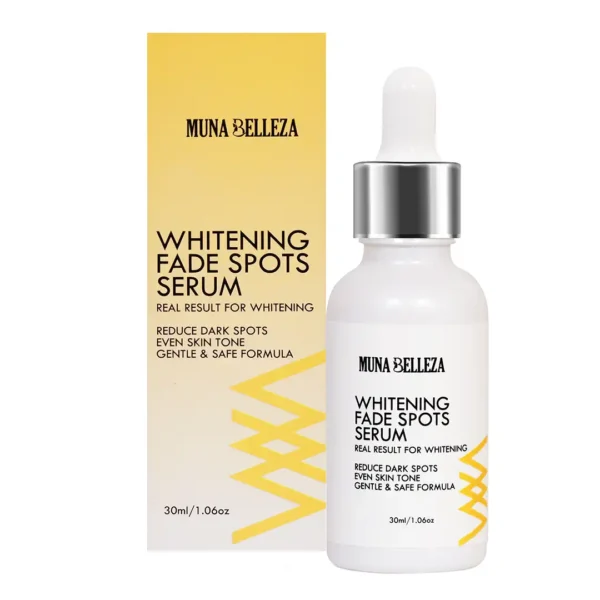 Serum for dark spots
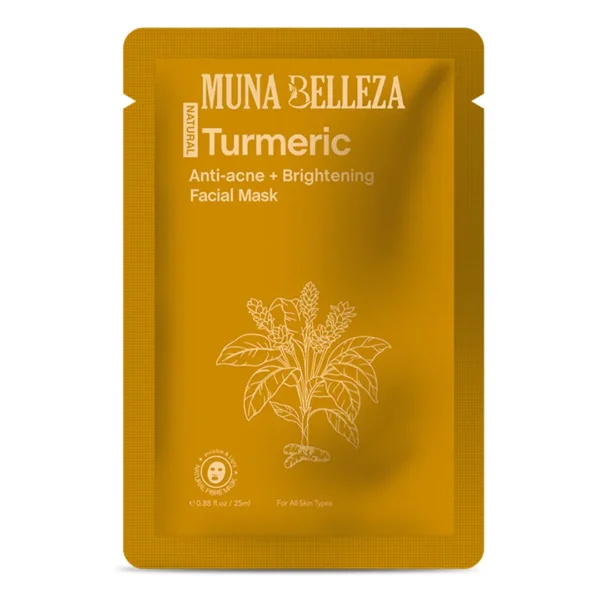 Brightening sheet mask
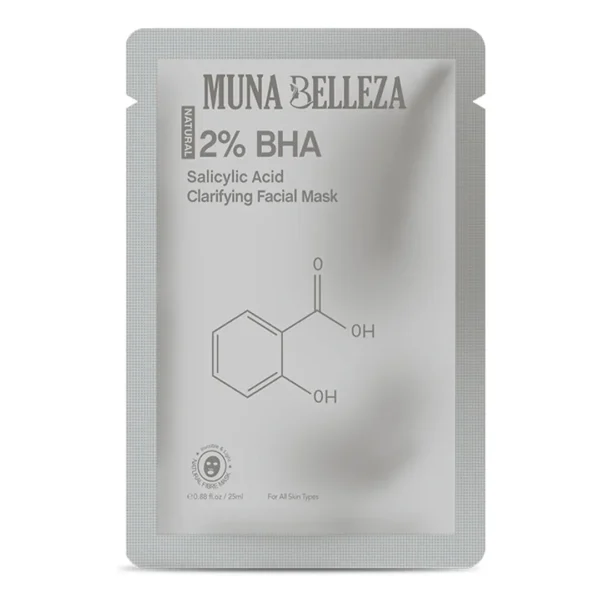 Mask for breakouts