For most of us in the UAE, the day doesn’t start until the first coffee. Lately it’s moved from the cup to the bathroom shelf too: ground-coffee scrubs, coffee and yoghurt masks, and endless recipes online. So is coffee for skin actually worth it, or is it mostly hype?
The honest answer sits in the middle. Coffee has real, modest benefits, mostly as an antioxidant, but some popular home uses do more harm than good. Below we separate the science from the social-media claims, explain what caffeine really does, and show when a ready-made product such as our coffee face mask can be a gentler choice than a homemade scrub.
Drinking coffee and your skin: what the studies say
The strongest evidence about coffee and skin is about drinking it, not applying it. A large study published in JAMA Dermatology in 2018 followed more than 82,000 women for many years. Those who drank more caffeinated coffee were less likely to develop rosacea; decaf and other caffeine sources, such as tea and chocolate, didn’t show the same link.
Keep its limits in mind. It was an observational study, so it shows an association, not proof that coffee prevents anything, and everyone in it was a woman. The careful takeaway is that people with rosacea don’t need to give up coffee to protect their skin. Very hot drinks can still trigger a flush simply because of the heat, so let your cup cool a little or choose iced coffee. And the sugar and cream many of us add bring no skin benefit at all.
Coffee benefits for skin when you apply it
Coffee is rich in polyphenols such as chlorogenic acid. These antioxidants help skin cope with everyday stress from sun and pollution, which is why coffee extract appears in so many skincare formulas. Caffeine itself narrows small blood vessels for a short while, which is why it’s a favourite in eye creams.
In practice, the coffee benefits for skin come down to three things:
- Antioxidant support against daily sun and pollution stress, alongside sunscreen, never instead of it.
- A short-term fresh look, especially when coffee is paired with hydrating ingredients.
- Temporarily less puffiness, but only from products that actually contain caffeine. Our puffy face guide covers what else helps on swollen mornings.
What coffee can’t do for your skin
Coffee won’t whiten skin, won’t clear dark spots quickly, won’t tighten skin permanently and won’t treat acne. Any “tightening” you feel after a coffee mask is the mask drying on the surface; it fades within hours. For pigmentation, it’s niacinamide, vitamin C and daily sunscreen that do the real work; see our hyperpigmentation guide. Think of coffee as a supporting antioxidant, not a treatment.
Coffee and yoghurt masks: do they brighten skin?
The most shared recipe mixes a spoon of fine ground coffee with two spoons of plain yoghurt or milk, left on the face for 10 to 15 minutes. Yoghurt contains lactic acid, a mild exfoliating acid, and the mix can leave skin feeling soft and looking a little brighter for the day.
That’s the realistic limit: a gentle, short-lived glow, not lasting coffee for skin brightening. Should you give it a go, use very finely ground coffee, apply it as a mask rather than a scrub, rinse with lukewarm water and skip it if your skin is sensitive or you have inflamed breakouts.
The downside of coffee scrubs on the face
The problem isn’t coffee as an ingredient. It’s how it’s used. Ground coffee granules are hard with sharp edges, and rubbing them on your face can cause:
- Tiny scratches and redness. Facial skin is much thinner than body skin, and harsh scrubbing weakens the skin barrier.
- Dryness and irritation, especially with daily use or when lemon or sugar is added to the mix.
- Worse breakouts. Scrubbing over inflamed spots spreads irritation; our acne guide explains gentler options.
- Allergic reactions, rare but possible, to coffee or to extras like honey and cinnamon.
- Grounds left behind in pores or around the nose, and brown staining on fair skin if you don’t rinse well.
In a UAE summer your skin already deals with heat, sun and air conditioning all day. It doesn’t need extra stress from a rough scrub.
Is a coffee scrub OK for sensitive skin?
We don’t recommend it. Sensitive skin reacts to friction, and coffee grounds are among the harshest physical exfoliants. If your skin flushes or stings easily, a leave-on sheet mask or a very mild chemical exfoliant used once a week is far kinder.
How to use coffee for skin care safely
- Choose ready-made over DIY where you can: formulated products use coffee extract without the gritty particles.
- Never rub grounds near the eyes; the skin there is the thinnest on your face.
- Patch-test anything new on a small area along the jawline and wait 24 hours.
- Moisturise afterwards and wear sunscreen, because any mask or exfoliation leaves skin thirstier and more sun-sensitive.
For when and how to fit masks into your week, see our best face mask guide, plus our step-by-step mask routine.
Our pick: a ready-made coffee mask
The Coffee Face Mask we sell combines coffee extract with well-studied skincare ingredients on a soaked sheet, with no gritty grounds. To be clear about what does what: niacinamide is the main active, supported by hyaluronic acid and glycerin for hydration and a small amount of vitamin C (ascorbyl palmitate). The coffee extract adds antioxidant support. Caffeine isn’t listed among its ingredients, so we don’t sell it as a de-puffing mask.
You get a fresh, hydrated look after one use, and with regular use the niacinamide helps even out the look of skin tone. Apply it to clean skin for 15 to 20 minutes, then remove the sheet and pat in the leftover essence without rinsing. It contains fragrance (aroma), so do a quick patch test first on very reactive skin. It’s a skincare product, not a treatment for rosacea or any skin condition.
Common questions
Is coffee for skin good or bad?
Mostly good, as an antioxidant in a well-made product. The bad side comes from harsh DIY scrubs, not from coffee itself.
What are the caffeine for skin benefits?
A brief reduction in puffiness and some antioxidant support. The effect is real but temporary, and only from products that contain caffeine.
Is coffee good for oily skin?
Coffee extract suits oily skin as an antioxidant, but it doesn’t control oil. Niacinamide and salicylic acid help more with shine and clogged pores.
Does coffee get rid of dark circles?
Caffeine can briefly reduce under-eye puffiness, but it won’t remove dark circles caused by genetics or thin skin. Our dark circles guide explains what does help. Never rub coffee grounds around your eyes.
How often can I use a coffee mask?
Up to three times weekly for a ready-made sheet mask. A homemade coffee scrub once a week at most, and only on skin that isn’t sensitive.
Does drinking coffee cause acne?
There’s no strong evidence that coffee itself causes acne, though lots of added sugar and milk may make breakouts worse for some people.
Is a coffee mask suitable for men?
Yes, for anyone. Just leave a gap of a few hours between shaving and the mask.
Enjoy your coffee in the cup, skip the rough scrub, and let a gentle mask do the pampering. Delivery is free to every emirate, and you can pay by card, Apple Pay or cash.
Explore the rest of our face masks for more ways to treat tired skin.
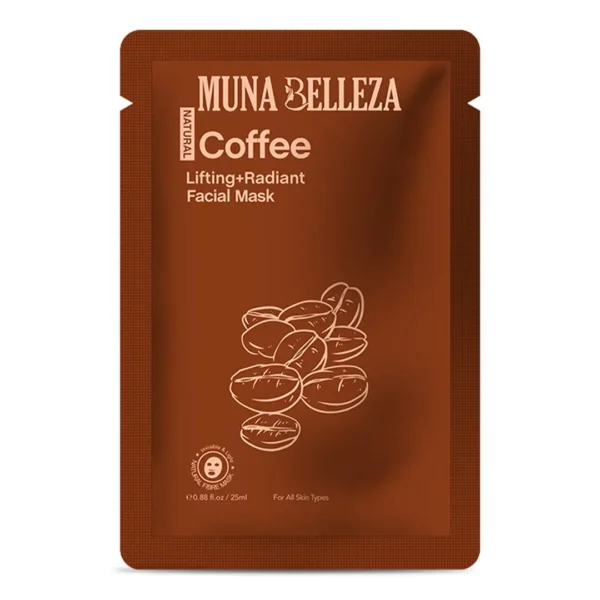 Coffee face mask
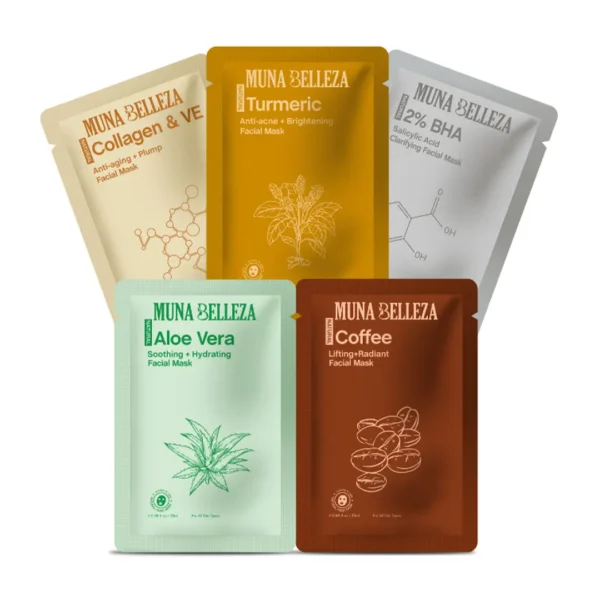 Sheet mask set
 Antioxidant serum